Home
Our Coatings
Our Process
Areas We Cover
Q&A Contact Us
📞 01384 444 4645 Calculate your cost online

Comprehensive Learning Resource & Q&A

How long do your coating systems last?
Unlike low-grade DIY shop paints which flake within a couple of seasons, our professional multi-layer industrial resin systems are chemically bonded directly inside the concrete matrix. With standard residential usage, these surfaces are designed to easily last 15 to 20+ years without peeling.
What is 'hot-tire pickup' and will it affect my new floor?
Hot-tire pickup occurs when standard store-bought DIY paints soften under the heat of car tires and peel right off when you drive away. Our commercial Polyaspartic and Epoxy sealants have exceptionally high thermal resistance and are guaranteed to never fuse with or peel from hot automotive tires.
How do I keep my new showroom floor clean?
Because our finishes are completely seamless and non-porous, dirt and oil cannot sink in. Cleaning simply requires a quick sweep followed by a damp mop using water mixed with a mild, pH-neutral clear household detergent. Harsh scrubbing is never required.
What is your structural installation process and journey?
Our professional-grade concrete transformation relies on a rigorous 3-step installation workflow:
  • 1. Mechanical Preparation: Heavy-duty diamond grinders mechanically profile and open concrete pores for absolute structural adhesion. All visible surface cracks, fractures, and spalled profiles are treated using industrial polyurea diamond repairs before micro-dust elements are completely vacuumed away.
  • 2. High-Solids Primer Framework: A deep-penetrating chemical anchor basecoat is applied directly into the slab foundation core, sealing off structural pores and actively blocking future ground moisture vapor pressure thresholds.
  • 3. Pattern Blending & Topcoat Armor: Precise hand application and broadcasting of dense decorative flake clusters or customized fluid metallic pigments. The system is then completely encapsulated under armor-grade polyaspartic or clear epoxy protective layers to resist abrasions, impact hazards, and harsh chemical spills.
When can I return my garage to service after installation?
Because our high-performance polyaspartic coatings utilize rapid cross-linking curing technology, downtime is minimized. Follow this return-to-service milestone guide:
  • 🚶‍♂️ Safe for Light Foot Traffic: 24 Hours post-application.
  • 📦 Moving Tools, Workbenches & Heavy Furniture: 48 Hours post-application.
  • 🚘 Full Load Automotive Vehicle Parking: 3 to 5 Days post-application.
How can I tell if my garage lacks effective insulation or a proper vapor barrier?
You don't need professional thermal cameras to spot a poorly insulated or unsealed garage. You can easily diagnose performance issues by watching out for these common household warning signs:
  • The \"Cardboard Test\": If cardboard storage boxes left on the floor or near walls become soft, soggy, or develop a musty smell, your garage is pulling moisture straight through the uninsulated slab or unsealed walls.
  • Sweating or Wet Floors: If your concrete floor looks damp, slick, or \"sweats\" during temperature transitions, it means you have a failing or non-existent ground vapor barrier. The cold concrete is instantly condensing warm air.
  • Rapid Temperature Echoing: If the garage instantly turns into an oven on hot days or feels like an icebox the moment winter air hits, there is zero thermal mass or insulation in the walls or garage door to slow down the heat transfer.
  • Ghosting or Wall Moisture: Look for dark patches, condensation lines, or peeling paint along the lower sections of your drywall. This indicates that exterior groundwater or cold temperatures are bleeding right through the masonry.
Choosing a premium multi-layer resin coating helps trap subsurface moisture before it reaches the air, completely eliminating sweating floors and protecting your stored items from humidity damage.
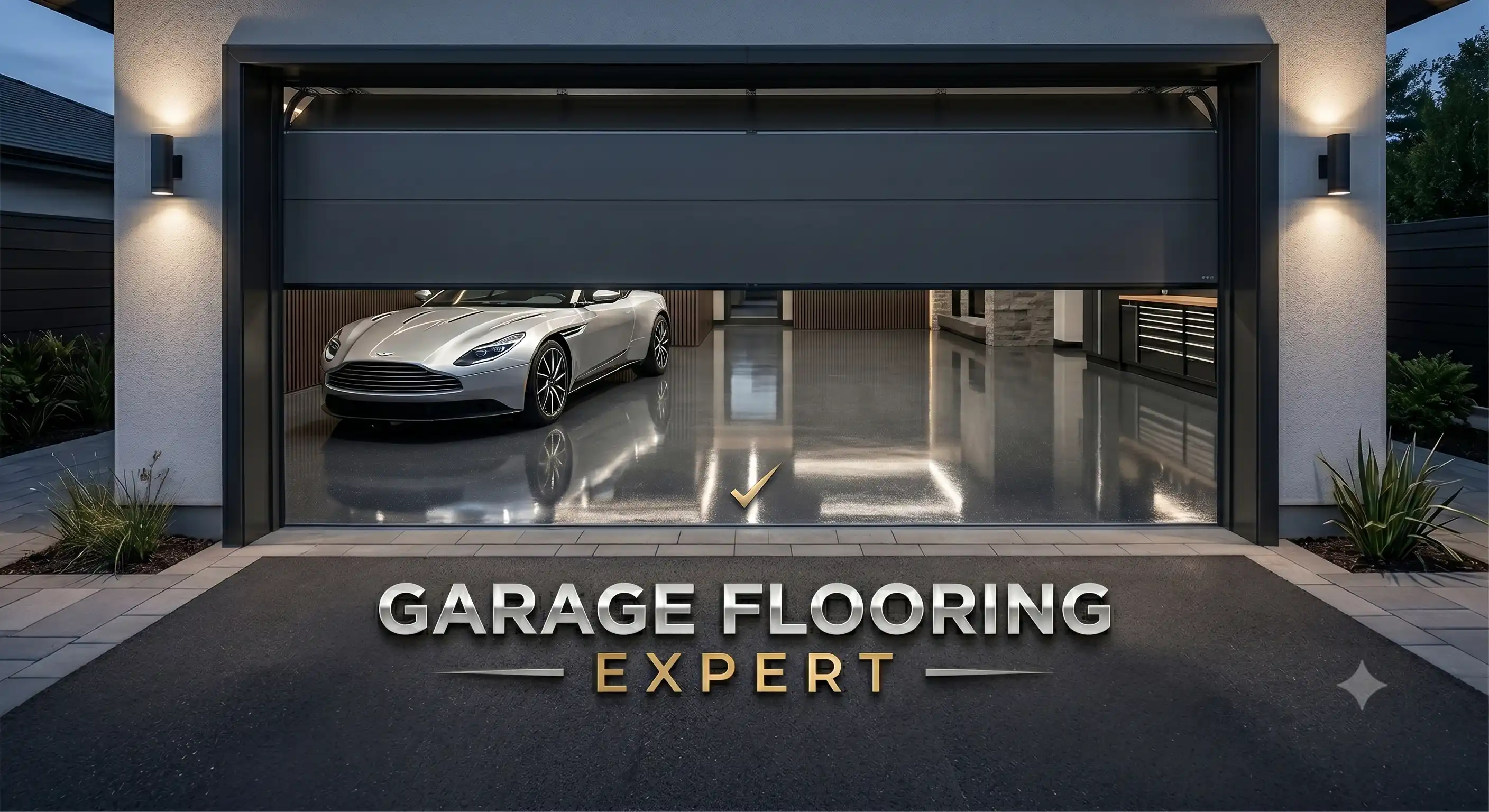
What occurs if my garage slab has uninsulated concrete and high moisture retention?

For properties dealing with active dampness or sub-floor moisture transitions, our team deploys a specialized multi-coat remediation lifecycle to permanently seal the substrate:

  • Precision Mechanical Profiling: We utilize heavy-duty, planetary diamond grinders to remove old surface contaminants, cleanly profiling the concrete and expanding the pore network to guarantee cross-linked chemical adhesion.
  • Hydrostatic Vapor Barrier Sub-Base: Rather than a basic primer, we apply a specialized 100% solids epoxy moisture mitigation barrier. Engineered to withstand intense hydrostatic vapor pressure pushing upward from the sub-base, it seals damp concrete pores entirely to form an unyielding structural anchor. Note: Actively mitigating heavy slab moisture requires these premium commercial-grade resins, which will introduce additional project cost configurations.
  • Textured Decorative Media Array: Our signature vinyl flake matrix or specialized metallic pigments are broadcast directly across the active moisture barrier, remaining completely isolated and protected from subsurface dampness.
  • Polyaspartic Defensive Shield: The entire assembly is sealed under an industrial polyaspartic architectural topcoat, delivering a non-porous, chemical-resistant finish that will never peel or scratch under daily vehicle operations.